First NAB Operations Manual and Six Guidelines Launched
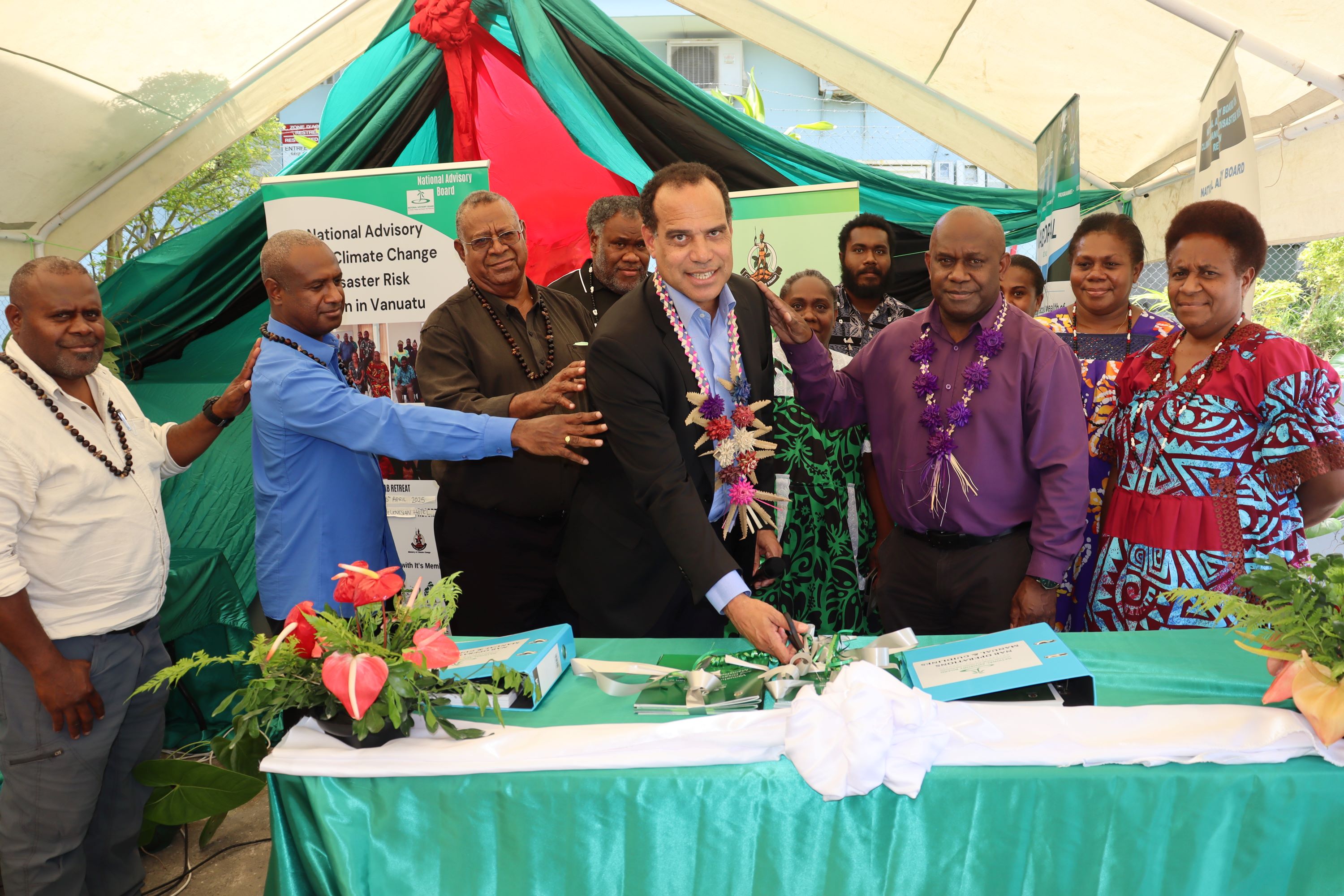
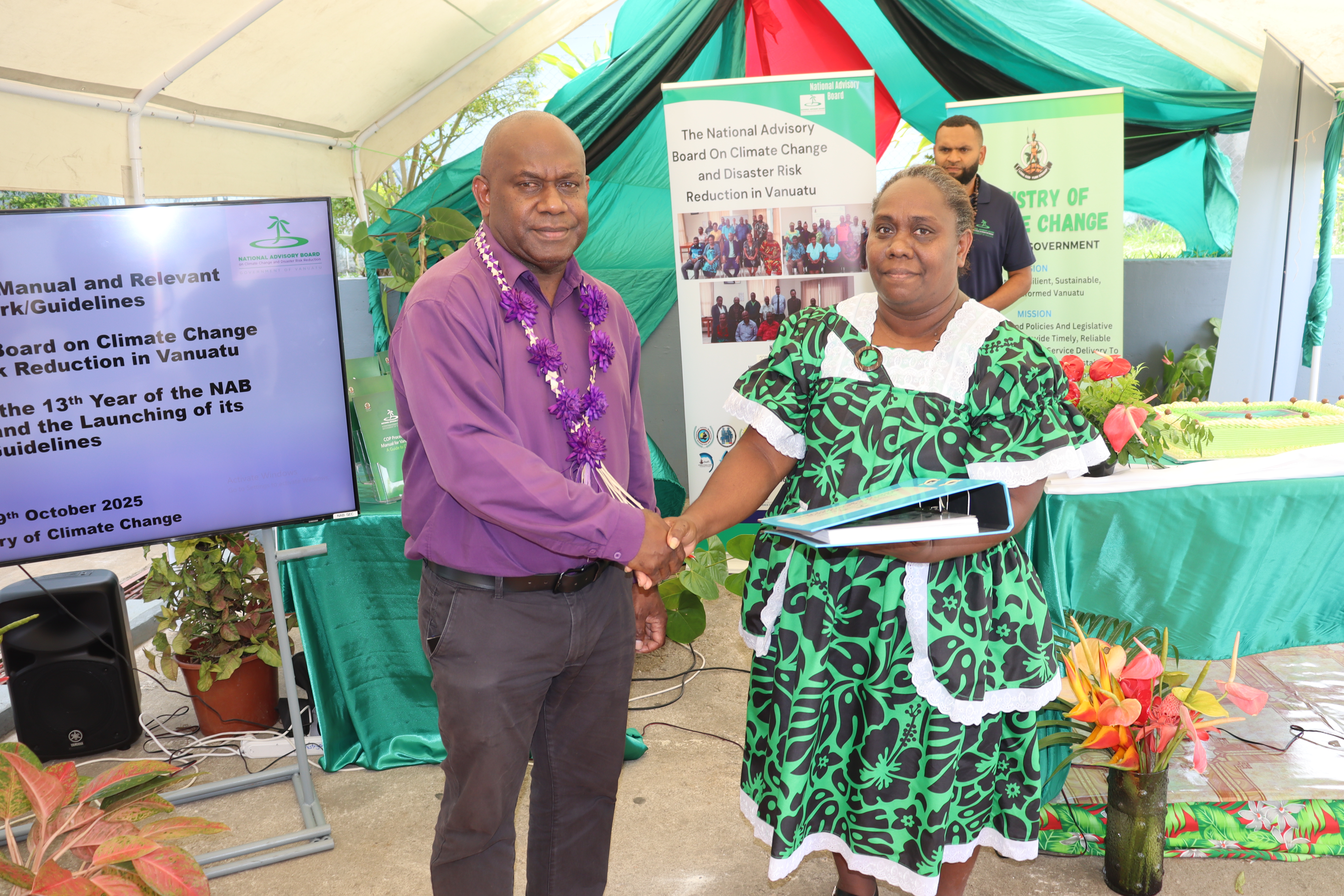
The Secretariat of the National Advisory Board on Climate Change and Disaster Risk Reduction (NAB) has today reached a milestone with the launch of its first ever Operations Manual and a set of six guidelines.
This historic moment for NAB, under the guidance of NAB Strategic Manager, Florence Iautu, has been reached after the institution was operating in the last 13 years as an advisory and policy-making body for climate change and disaster risk reduction programs, projects, initiatives and activities in Vanuatu.
The Director General of the Ministry of Climate Change who is also the NAB Chair, Mr David Gibson, has congratulated the NAB Secretariat and welcomed the completion and launch of the NAB Operations Manual and six guidelines.
“The NAB Operations Manual and guidelines will ensure a harmonised approach towards addressing climate change and disaster risk reduction initiatives and activities for Vanuatu.”
Today’s event also commemorates 13 years for NAB since its inception in 2012 and to pay tribute to those involved to establish it with former and current staff that put so much effort to ensure NAB operates and achieves its annual goals.
Operations Manual
The NAB Operations Manual is a guiding document that provides employees with information about how to implement their duties and ensures all employees are on the same track in implementing their areas of responsibilities to ensure a functioning Secretariat.
The Operations Manual contains information on NAB’s Organizational Profile, Board Operations, Finanance, Board Education and Resources that provide information on different processes like the project endorsement process and NAB Standard Operations Procedures.
It also contains information on the operation of the NAB Secretariat, which includes the staff structure.
The Manual also provides guidance on NAB Working Groups and Taskforce Operations as well as the Act, Policy and Guidelines that govern the NAB operations.
Six Guidelines
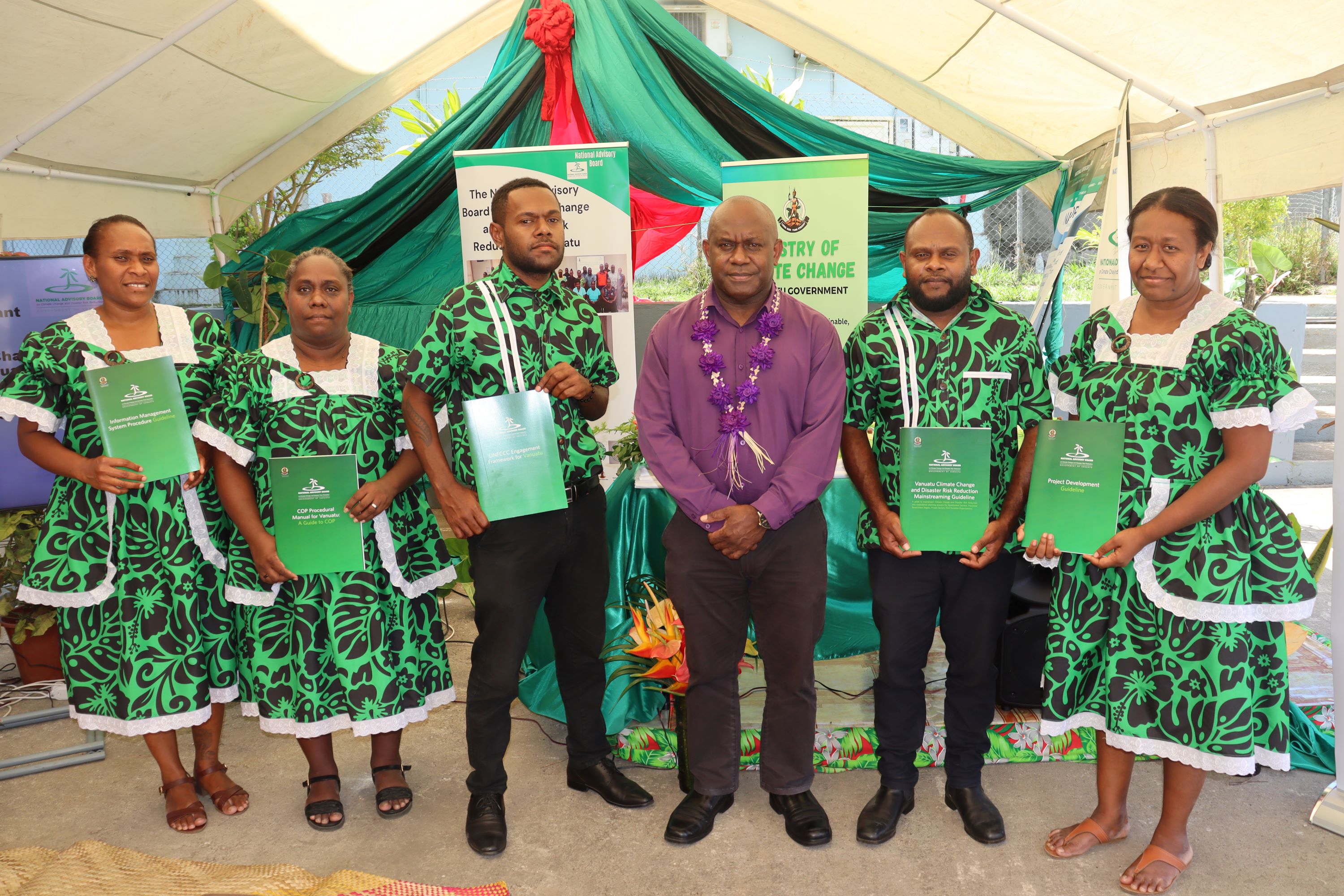
These are the six guidelines that are also launched today.
1. NAB Project Development Procedural Guideline
This guideline works alongside the National Designated Authority Project Development handbook to provide guidance to the NAB Secretariat on procedures for Climate Change and Disaster Risk Reduction (CCDRR) programme funding proposals and monitoring and evaluation of projects being implemented.
2. UNFCCC Engagement Guideline
The UNFCCC Engagement Guideline aims to guide the NAB Secretariat, Ministry of Climate Change, respective Government sectors, researchers, civil society and others interested in the international climate change negotiations of Vanuatu’s engagement to the UNFCCC.
3. COP Procedural Manual
This Manual is envisaged to guide the NAB Secretariat, COP participants and other key stakeholders of the national preparations, attendance and the post COP arrangement.
4. CCDRR Policy Mainstreaming Guideline
This guideline is intended to utilise existing mechanism and governance structure provided for effective mainstreaming of CCDRR priorities across all sectors.
5. CCDRR Mainstreaming Guideline
This aims to mainstream and integrate CCDRR national priorities as depicted within the National Policies, and implementation plan in a more effective, coordinated and strategic approach to all key stakeholders across government sectors, CSOs, Private Sector and Provincial Governments.
6. Information Management System Guideline
This guideline provides comprehensive framework for the effective management of the information within NAB. It aims to ensure that all information are handled in a systematic, secure and efficient manner, aligning with best practices and regulatory requirements.
About NAB
The National Advisory Board on Climate Change and Disaster Risk Reduction (NAB) was formally established on October 15, 2012, after approval by the Council of Ministers meeting held on that date.
It is being administered and operates under Part Three of the Meteorology and Geological Hazards and Climate Change Act of 2016.
Currently NAB Secretariat facilitates the UNFCCC Taskforce, Project Screening Committee, Climate Finance, Policy and Compliance, Loss and Damage working groups and Information, Education and Communication Endorsement Committee to support the work of the National Advisory Board (NAB).